
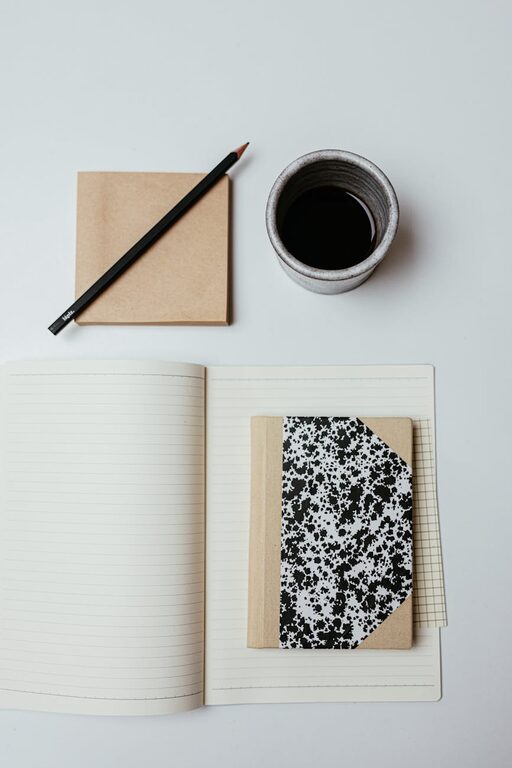
Choosing the right notebook might sound simple, but anyone who has ever bought one knows it’s easy to end up with a notebook that doesn’t get used. Whether you want to journal, plan your work, or jot down creative ideas, the notebook you pick should encourage you to open it every day. This guide will help you find a notebook that suits your style, needs, and habits so it becomes a valued part of your routine.
Why Choosing the Right Notebook Matters
A good notebook can be more than just paper and binding. It can motivate you to write, organize your thoughts, and track progress. Conversely, an ill-suited notebook might collect dust on your shelf or become a source of frustration. Consider what you want from your notebook first. Are you looking for something to take quick notes? Or perhaps a space to reflect deeply through journaling?
Step 1: Determine Your Purpose
Start by asking yourself:
– What will you use the notebook for?
– Will it be for daily work notes, creative writing, bullet journaling, or sketching?
– Will you carry it around, or will it mostly stay on your desk?
Answering these questions helps narrow down features like size, paper type, and binding style.
Common Notebook Uses and What They Require
| Use | Recommended Features |
|———————-|——————————————-|
| Note-taking | Medium size (A5), ruled lines, durable cover |
| Journaling | Smooth paper, dot grid or blank pages, compact |
| Sketching | Thick, unlined paper, spiral binding |
| Bullet journaling | Dot grid pages, sturdy cover, page numbers|
| Planning and lists | Sections or tabbed dividers, portable size|
Step 2: Choose the Right Size
Notebooks come in various sizes, each suited to different uses:
– Pocket size (A6 or smaller): Perfect for quick notes and on-the-go ideas but may be too small for detailed writing.
– Medium size (A5): A versatile choice that fits in most bags and provides enough space for writing.
– Large size (A4 or letter): Great for in-depth notes and sketching but less portable.
Think about how often you’ll carry your notebook and whether size will affect your willingness to use it.
Step 3: Pick the Paper Type and Weight
Paper quality impacts your writing experience and what tools you can comfortably use.
– Lined paper: Helps keep handwriting neat, ideal for writing or note-taking.
– Blank paper: Best for drawing or freeform writing.
– Dot grid paper: Offers subtle guidance, popular for bullet journaling and creative layouts.
Paper weight, measured in grams per square meter (gsm), typically ranges from 70 to 120 gsm:
– Lower weight (70-80 gsm) absorbs ink more and may bleed through.
– Higher weight (90-120 gsm) provides better durability and prevents bleed-through, especially with markers or fountain pens.
If you use special pens, check reviews or test paper quality before purchasing.
Step 4: Consider Binding and Cover Style
Binding affects how flat your notebook lies when open and its durability:
– Spiral-bound: Lies flat easily, convenient for writing on both sides. However, it can bend or catch on things.
– Perfect bound (like paperback books): Sleek but might not lie fully flat.
– Thread-bound stitched notebooks: Often durable and lay flat after some use.
Cover materials include:
– Hardcover: Durable, offers good protection, ideal if you carry your notebook daily.
– Softcover: Lighter and more flexible but less wrist support.
Choose what feels comfortable and fits your lifestyle.
Step 5: Extra Features to Think About
Some notebooks come with helpful extras:
– Page numbers: Great for indexing and quick reference.
– Expandable inner pockets: Store receipts, notes, or stickers.
– Bookmark ribbons: Makes it easy to find your place.
– Perforated pages: Allows easy removal.
– Pre-printed templates: Such as calendars or habit trackers.
Decide which features will enhance your experience without adding clutter.
Step 6: Set a Budget
Notebooks range from very affordable to premium and artisanal. Quality often reflects in paper feel and durability, but you don’t need the most expensive notebook to get value.
– If you’re trying out a new style or method, start inexpensive.
– For daily use and special projects, investing in a well-made notebook can pay off in satisfaction and longevity.
Step 7: Test It Out
If possible, visit a store to handle different notebooks. Feel the paper, open and close the binding, and imagine your daily writing experience.
If shopping online, read reviews and look for detailed photos. Some sellers offer sample sheets or trial notebooks.
Making Your Notebook a Habit
Even the best notebook won’t help if left unopened. Here are some tips to encourage regular use:
– Keep your notebook visible and easily accessible.
– Set a daily or weekly time to write, plan, or doodle.
– Personalize it with stickers, doodles, or notes to make it inviting.
– Use a favorite pen or pencil that feels good in your hand.
Final Thoughts
Choosing a notebook you’ll actually use means thinking beyond the cover and price tag. Match its size, paper, and features with how you want to write or create. The right notebook becomes a trusted companion, helping you capture ideas, organize your day, and explore your thoughts. Take the time to find one that feels right—it’s worth it.
Happy writing!